Quick Answer
Artificial Intelligence has evolved rapidly over the past few years. While AI chatbots, automation tools, and machine learning systems have already changed the way businesses operate, a new wave of...
Artificial Intelligence has evolved rapidly over the past few years. While AI chatbots, automation tools, and machine learning systems have already changed the way businesses operate, a new wave of innovation is now taking center stage: AI Agents.
In 2026, AI agents are no longer experimental technologies used by a handful of tech companies. They are becoming an essential part of modern business operations across industries. From customer support and sales to project management and data analysis, AI agents are helping organizations work smarter, faster, and more efficiently.
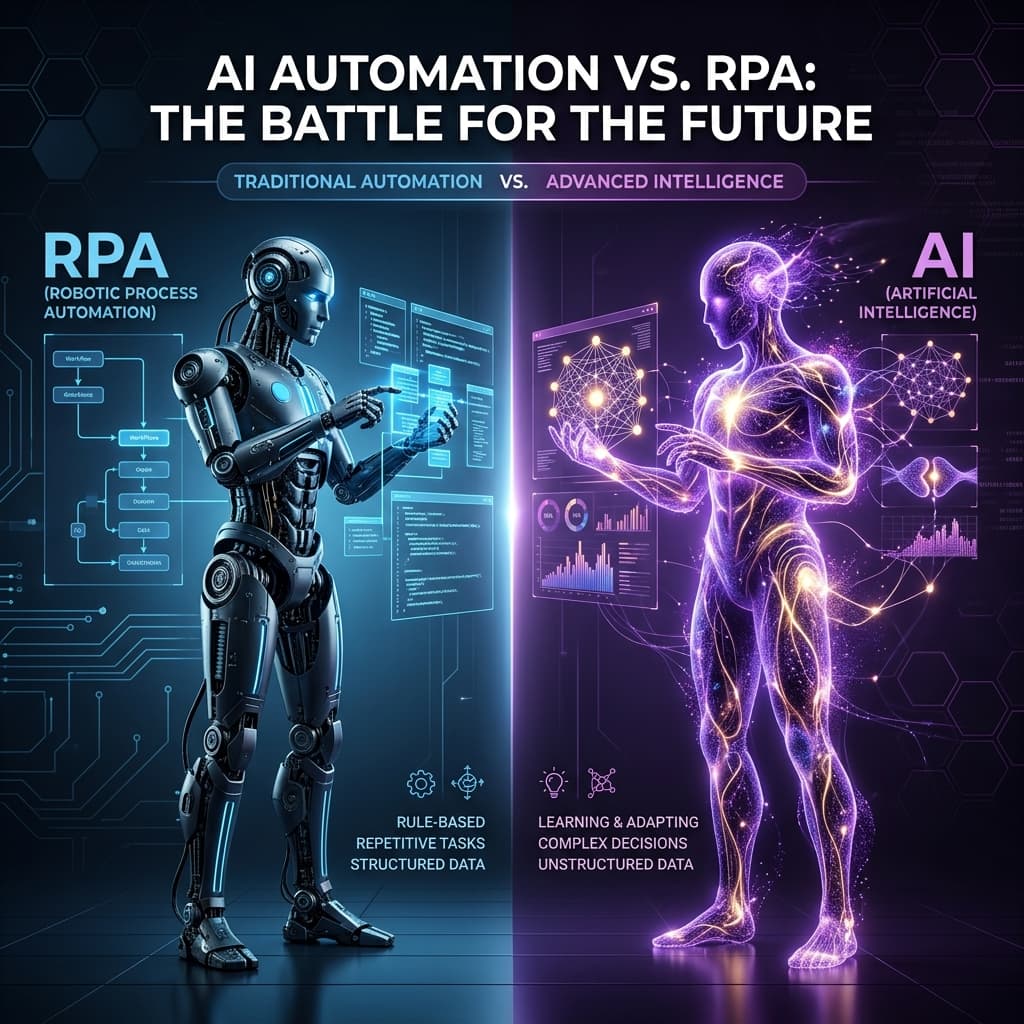
Unlike traditional automation tools that follow predefined rules, AI agents can understand context, make decisions, learn from interactions, and perform complex tasks with minimal human intervention. They act like digital team members that can handle repetitive work, assist employees, and improve overall productivity.
As businesses face increasing competition, rising operational costs, and growing customer expectations, AI agents are emerging as a powerful solution for driving efficiency and innovation.
In this article, we'll explore what AI agents are, how they work, and why they are transforming business operations in 2026.
Key Takeaways
- AI agents are intelligent systems capable of performing tasks, making decisions, and adapting to changing situations.
- Businesses are using AI agents to automate complex workflows beyond simple rule-based automation.
- AI agents improve productivity, reduce operational costs, and enhance customer experiences.
- Industries such as healthcare, finance, retail, logistics, and manufacturing are rapidly adopting AI agents.
- AI agents can integrate with existing software systems and work alongside human teams.
- Organizations that embrace AI agents gain a significant competitive advantage in efficiency and scalability.
What Are AI Agents?
AI agents are intelligent software systems designed to perform tasks autonomously while interacting with users, systems, and data sources.
Unlike traditional software that requires constant instructions, AI agents can:
- Understand objectives
- Analyze information
- Make decisions
- Complete tasks
- Learn from outcomes
- Adapt to new situations
Think of an AI agent as a digital employee that can handle specific responsibilities without requiring constant supervision.
For example, an AI agent can:
- Respond to customer inquiries
- Schedule meetings
- Generate reports
- Analyze business data
- Manage inventory updates
- Qualify sales leads
- Monitor system performance
Instead of simply following a predefined workflow, AI agents can evaluate situations and determine the best course of action.
Why AI Agents Are Gaining Popularity in 2026
Several factors are driving the rapid adoption of AI agents.
Advances in Large Language Models
Modern AI models can understand natural language more accurately than ever before.
This allows AI agents to communicate naturally with users, understand instructions, and complete sophisticated tasks.
Growing Business Complexity
Businesses today manage multiple systems, teams, and processes.
AI agents help bridge gaps between departments by automating workflows and reducing manual coordination.
Demand for Operational Efficiency
Organizations are constantly looking for ways to improve productivity while controlling costs.
AI agents help businesses accomplish more without significantly increasing headcount.
Increased Accessibility
AI technologies have become more affordable and easier to implement.
Businesses of all sizes can now deploy AI agents without requiring massive technology budgets.
How AI Agents Differ from Traditional Automation
Traditional automation focuses on predefined workflows.
For example:
"If a customer submits a form, send an email."
While useful, these systems cannot adapt to unexpected situations.
AI agents operate differently.
They can:
- Understand context
- Analyze multiple data sources
- Make decisions
- Adjust actions based on changing conditions
For example, a sales AI agent can:
- Analyze lead behavior
- Prioritize prospects
- Draft personalized outreach messages
- Schedule meetings
- Update CRM records
All without human involvement.
This flexibility makes AI agents significantly more powerful than traditional automation tools.
Key Areas Where AI Agents Are Transforming Business Operations
Customer Support
Customer service is one of the most common applications of AI agents.
Modern AI support agents can:
- Handle customer inquiries
- Resolve common issues
- Escalate complex cases
- Access company knowledge bases
- Provide personalized responses
This allows businesses to offer 24/7 support while reducing support costs.
Customers receive faster responses, and support teams can focus on high-value interactions.
Sales and Lead Management
Sales teams spend a significant amount of time on repetitive administrative tasks.
AI agents can automate:
- Lead qualification
- Follow-up emails
- Appointment scheduling
- CRM updates
- Prospect research
By handling these activities, AI agents allow sales professionals to focus on closing deals and building relationships.
Marketing Operations
Marketing teams are increasingly using AI agents to improve campaign performance.
AI agents can:
- Analyze customer behavior
- Create audience segments
- Generate content ideas
- Optimize ad campaigns
- Monitor performance metrics
This helps businesses make data-driven marketing decisions faster.
Human Resources
Recruitment and employee management involve numerous repetitive tasks.
AI agents can assist with:
- Resume screening
- Candidate evaluation
- Interview scheduling
- Employee onboarding
- HR support requests
This improves hiring efficiency and enhances the employee experience.
Finance and Accounting
Financial operations require accuracy and efficiency.
AI agents can automate:
- Invoice processing
- Expense tracking
- Financial reporting
- Fraud detection
- Compliance monitoring
This reduces manual work and minimizes human errors.
IT and System Management
IT departments are adopting AI agents to monitor and manage infrastructure.
These agents can:
- Detect system issues
- Respond to incidents
- Monitor security threats
- Generate performance reports
- Recommend optimizations
As a result, businesses experience improved uptime and stronger cybersecurity.
The Benefits of AI Agents for Businesses
Increased Productivity
One of the biggest advantages of AI agents is their ability to perform tasks continuously.
Unlike human employees, AI agents can operate 24 hours a day without breaks.
This allows businesses to complete more work in less time.
Reduced Operational Costs
AI agents can automate tasks that would otherwise require additional staff.
By reducing manual effort, organizations can lower operational costs while maintaining service quality.
Faster Decision-Making
AI agents process information quickly and provide actionable insights.
This enables managers and executives to make informed decisions faster.
Improved Customer Experience
Customers expect quick and personalized interactions.
AI agents can deliver instant responses and tailored experiences, leading to higher customer satisfaction.
Scalability
As businesses grow, workloads increase.
AI agents can handle growing volumes of tasks without requiring proportional increases in staffing.
This makes scaling operations more cost-effective.
Real-World Examples of AI Agents in Action
Retail
Retail businesses use AI agents to:
- Recommend products
- Manage inventory
- Forecast demand
- Improve customer service
This creates a more personalized shopping experience while improving operational efficiency.
Healthcare
Healthcare providers use AI agents to:
- Schedule appointments
- Assist patients
- Analyze medical records
- Support administrative tasks
This helps reduce administrative burdens and improve patient care.
Logistics
Logistics companies use AI agents to optimize routes, track shipments, and manage supply chains.
The result is faster delivery times and lower operational costs.
Financial Services
Banks and financial institutions deploy AI agents for fraud detection, customer support, and risk assessment.
These systems improve security while enhancing customer experiences.
Challenges Businesses Must Consider
Although AI agents offer tremendous benefits, organizations should also consider potential challenges.
Data Quality
AI agents rely on accurate and reliable data.
Poor data quality can lead to incorrect decisions and reduced effectiveness.
Security and Privacy
Businesses must ensure AI systems follow data protection regulations and security best practices.
Change Management
Employees may initially resist adopting AI technologies.
Organizations should focus on training and communication to encourage successful adoption.
Human Oversight
AI agents are powerful tools, but they should not completely replace human judgment.
Businesses should maintain appropriate oversight for critical decisions.
The Future of AI Agents
The capabilities of AI agents will continue to expand over the coming years.
Future AI agents will likely:
- Collaborate with multiple systems simultaneously
- Handle increasingly complex business tasks
- Deliver deeper business insights
- Work alongside employees as digital teammates
- Drive autonomous business processes
As technology advances, AI agents will become a standard component of modern business operations.
Organizations that begin adopting these technologies today will be better positioned for long-term success.
Why Businesses Should Invest in AI Agents Now
Companies that delay AI adoption risk falling behind competitors who are already improving efficiency through intelligent automation.
The benefits of early adoption include:
- Increased operational efficiency
- Lower costs
- Better customer experiences
- Faster growth
- Improved competitiveness
AI agents are no longer a future trend. They are becoming a business necessity.
The sooner organizations begin integrating AI agents into their workflows, the sooner they can realize measurable results.
Conclusion
AI agents are fundamentally changing how businesses operate in 2026. Unlike traditional automation tools, these intelligent systems can understand context, make decisions, learn from data, and perform complex tasks with minimal human intervention.
From customer service and sales to finance, HR, and IT operations, AI agents are helping organizations increase productivity, reduce costs, and improve customer experiences. Their ability to work continuously, integrate with existing systems, and adapt to changing business needs makes them one of the most valuable technologies available today.
As businesses continue their digital transformation journey, AI agents will play an increasingly important role in shaping efficient, scalable, and future-ready organizations. Companies that embrace this technology today will be better equipped to compete, innovate, and grow in an increasingly AI-driven world.
Ready to Build AI Agents for Your Business?
AI agents have the power to automate repetitive tasks, streamline operations, improve customer experiences, and unlock new levels of productivity. Whether you're looking to deploy AI-powered customer support, intelligent workflow automation, sales assistants, or industry-specific AI solutions, the right strategy can transform your business operations.
At SlingVerse, we design and develop custom AI agents tailored to your business goals, processes, and technology ecosystem. Our team helps organizations build intelligent solutions that deliver measurable results and long-term value.
Book a free consultation today and discover how custom AI agents can help your business work smarter, scale faster, and stay ahead of the competition.