Quick Answer
Cloud computing has become the foundation of modern business operations. From startups and growing businesses to global enterprises, organizations rely on cloud platforms to run applications, store...
Cloud computing has become the foundation of modern business operations. From startups and growing businesses to global enterprises, organizations rely on cloud platforms to run applications, store data, support remote teams, and deliver digital services.
For years, many businesses adopted a single cloud provider to manage their infrastructure needs. While this approach worked initially, growing demands for flexibility, reliability, scalability, and security have led organizations to rethink their cloud strategies.
Today, an increasing number of businesses are moving toward multi-cloud infrastructure.
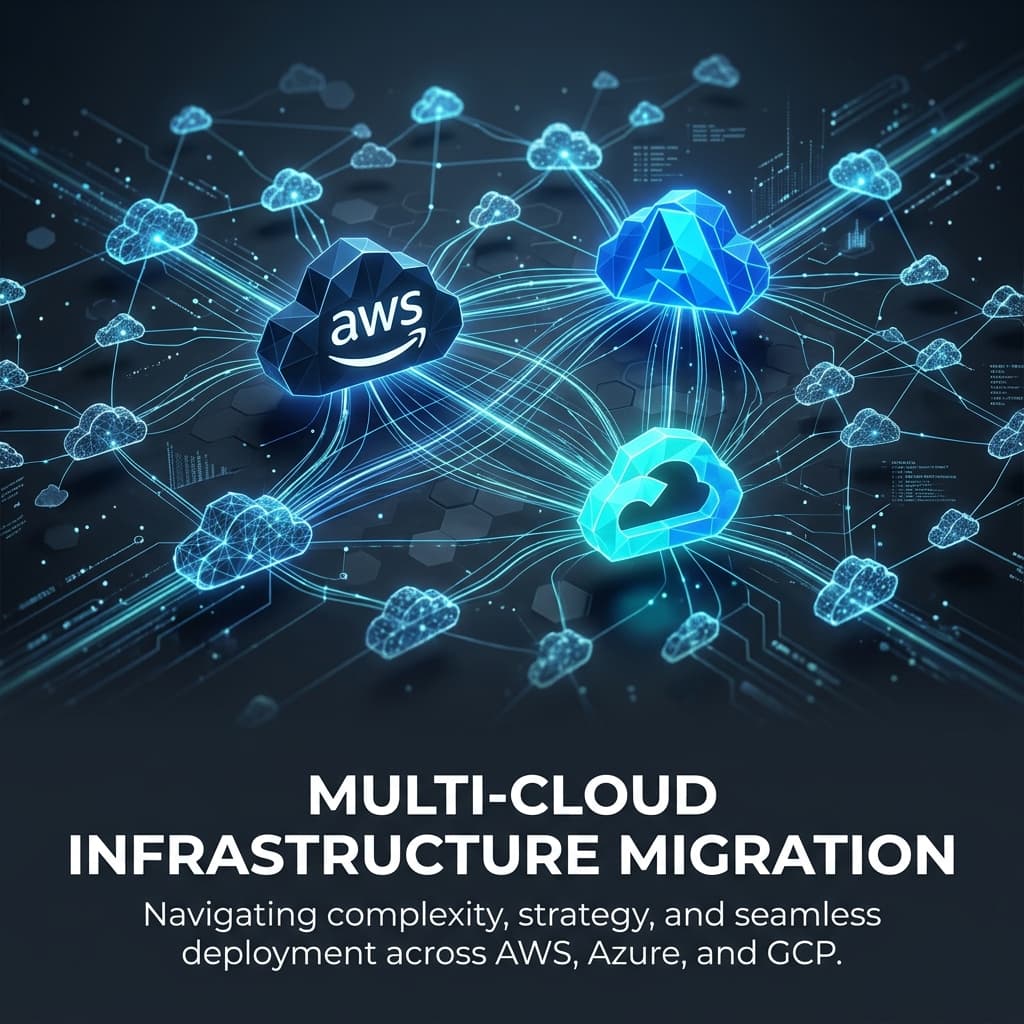
Rather than relying on a single cloud provider, organizations are using services from multiple cloud platforms such as AWS, Microsoft Azure, Google Cloud, and other specialized providers. This strategy allows businesses to leverage the strengths of different cloud environments while reducing risks associated with vendor dependency.
As digital transformation accelerates across industries, multi-cloud infrastructure is becoming a key component of modern IT strategies.
In this article, we'll explore what multi-cloud infrastructure is, why businesses are adopting it, and how it helps organizations improve performance, security, scalability, and resilience.
Key Takeaways
- Multi-cloud infrastructure involves using multiple cloud providers to support business operations.
- Businesses are adopting multi-cloud strategies to improve flexibility and reduce vendor dependency.
- Multi-cloud environments improve reliability by minimizing the impact of outages.
- Organizations can optimize costs by selecting the best services from different providers.
- Multi-cloud infrastructure enhances security, compliance, and business continuity.
- Businesses gain greater scalability and innovation opportunities through multi-cloud adoption.
What Is Multi-Cloud Infrastructure?
Multi-cloud infrastructure refers to the use of two or more cloud service providers within an organization's IT environment.
Instead of relying entirely on one provider, businesses distribute workloads, applications, databases, and services across multiple cloud platforms.
For example, a company might:
- Host customer-facing applications on AWS
- Store analytics data on Google Cloud
- Run enterprise applications on Microsoft Azure
- Use specialized cloud services from additional providers
Each cloud platform contributes unique strengths and capabilities.
This approach allows businesses to build a more flexible and resilient infrastructure.
Why Single-Cloud Strategies Are Becoming Less Attractive
Many organizations initially choose a single cloud provider because it simplifies deployment and management.
However, as businesses grow, they often encounter limitations.
Vendor Lock-In
One of the biggest concerns with a single-cloud strategy is vendor lock-in.
When all systems depend on one provider, migrating to another platform becomes difficult and expensive.
Businesses may face:
- Rising costs
- Limited flexibility
- Reduced negotiation power
- Dependence on a provider's roadmap
Multi-cloud strategies help eliminate this dependency.
Service Limitations
No cloud provider excels in every category.
One platform may offer superior machine learning capabilities, while another provides stronger database services or enterprise integrations.
Businesses increasingly want the freedom to choose the best tool for each workload.
Risk of Downtime
Even the largest cloud providers occasionally experience service outages.
A single-cloud outage can disrupt critical business operations.
Multi-cloud infrastructure reduces this risk by distributing services across multiple environments.
The Growing Demand for Business Resilience
Business continuity has become a top priority for organizations worldwide.
Customers expect digital services to remain available at all times.
Downtime can result in:
- Revenue loss
- Productivity disruptions
- Customer dissatisfaction
- Brand reputation damage
Multi-cloud infrastructure helps organizations create redundancy.
If one cloud provider experiences issues, workloads can continue operating on another platform.
This improves availability and strengthens disaster recovery capabilities.
Improved Flexibility and Freedom
Modern businesses need flexibility to adapt quickly to changing market conditions.
Multi-cloud environments provide greater flexibility in several ways.
Choose the Best Service for Each Need
Organizations can select specific services based on performance, cost, and functionality.
For example:
- AWS for scalability
- Azure for enterprise integrations
- Google Cloud for AI and analytics
Rather than settling for one provider's ecosystem, businesses can build an infrastructure tailored to their goals.
Easier Expansion
As companies grow into new regions or launch new products, they may require different cloud capabilities.
A multi-cloud strategy provides the flexibility needed to support expansion without major infrastructure changes.
Better Cost Optimization
Managing cloud costs is a major concern for organizations of all sizes.
Different providers offer different pricing models.
A multi-cloud approach allows businesses to:
- Compare pricing
- Select cost-effective services
- Avoid unnecessary expenses
- Negotiate better contracts
Organizations can move workloads to providers offering better value without being tied to a single vendor.
This flexibility helps optimize long-term infrastructure spending.
Enhanced Security and Compliance
Security remains one of the most important factors in cloud adoption.
Businesses must protect sensitive information while complying with industry regulations.
Multi-cloud environments can strengthen security by:
- Distributing workloads
- Reducing single points of failure
- Applying different security controls
- Improving disaster recovery capabilities
Organizations can also select providers that offer compliance certifications aligned with their industry requirements.
This is particularly important for sectors such as:
- Healthcare
- Finance
- Insurance
- Government
- Legal services
Improved Performance and User Experience
User expectations continue to rise.
Customers expect applications to load quickly and remain responsive regardless of location.
Multi-cloud infrastructure allows businesses to deploy services closer to users.
Benefits include:
- Lower latency
- Faster response times
- Better application performance
- Improved customer experiences
By leveraging data centers from multiple providers around the world, businesses can deliver more reliable services to global audiences.
Supporting AI, Data Analytics, and Innovation
Emerging technologies are driving cloud adoption.
Organizations are increasingly investing in:
- Artificial Intelligence
- Machine Learning
- Big Data Analytics
- IoT Solutions
- Advanced Automation
Different cloud providers offer unique strengths in these areas.
For example:
- One platform may provide advanced AI tools.
- Another may offer superior data processing capabilities.
A multi-cloud strategy allows organizations to leverage the best technologies available without limitations.
This accelerates innovation and improves business agility.
Strengthening Disaster Recovery and Business Continuity
Unexpected disruptions can happen at any time.
These may include:
- Cyberattacks
- Infrastructure failures
- Natural disasters
- Human errors
Businesses need a reliable recovery strategy.
Multi-cloud infrastructure improves disaster recovery by:
- Replicating critical data
- Distributing workloads
- Maintaining backup environments
- Supporting rapid failover processes
This reduces downtime and minimizes business disruptions.
Multi-Cloud and DevOps: A Powerful Combination
Modern DevOps practices focus on speed, automation, and continuous improvement.
Multi-cloud environments complement DevOps strategies by providing:
- Greater deployment flexibility
- Enhanced scalability
- Improved automation opportunities
- Faster application delivery
Development teams can deploy applications across multiple environments while optimizing performance and reliability.
This helps organizations innovate faster and respond more effectively to market demands.
Common Challenges of Multi-Cloud Adoption
While multi-cloud offers many advantages, organizations should also understand potential challenges.
Increased Complexity
Managing multiple cloud platforms requires additional expertise and planning.
Each provider has unique:
- Tools
- Services
- Interfaces
- Security policies
Businesses must establish effective governance practices.
Skills and Training
IT teams may need training to manage multiple environments efficiently.
Investing in cloud expertise is essential for successful implementation.
Visibility and Monitoring
Organizations need centralized monitoring solutions to manage performance, security, and costs across all cloud platforms.
Without proper visibility, complexity can increase.
Best Practices for Multi-Cloud Success
Businesses planning a multi-cloud strategy should follow several best practices.
Define Clear Objectives
Identify the business goals driving cloud adoption.
Examples include:
- Cost optimization
- Improved resilience
- Better scalability
- Enhanced compliance
Develop a Cloud Governance Framework
Establish policies for:
- Security
- Compliance
- Access management
- Resource allocation
Automate Where Possible
Automation reduces operational complexity and improves consistency.
Partner with Experienced Cloud Experts
Working with an experienced AI and DevOps specialists helps organizations avoid common implementation challenges.
Expert guidance can significantly accelerate success.
Why Multi-Cloud Is Becoming the Future of Enterprise Infrastructure
Businesses are becoming increasingly digital.
As organizations adopt AI, automation, advanced analytics, and global applications, infrastructure requirements continue to evolve.
Multi-cloud strategies provide the flexibility and resilience needed to support these demands.
Rather than depending on a single vendor, businesses can create highly adaptable environments capable of supporting future growth.
This shift is transforming how organizations approach technology investments.
For many enterprises, multi-cloud is no longer a competitive advantage—it is quickly becoming a business necessity.
Conclusion
Modern businesses operate in a rapidly changing digital environment where reliability, scalability, security, and flexibility are essential for success. While single-cloud environments may meet basic requirements, they often introduce limitations related to vendor dependency, resilience, and innovation.
Multi-cloud infrastructure addresses these challenges by allowing organizations to leverage the strengths of multiple cloud providers. This approach improves business continuity, enhances security, optimizes costs, and provides greater flexibility for future growth.
As cloud technologies continue to evolve, businesses that embrace multi-cloud strategies will be better positioned to adapt, innovate, and compete in an increasingly digital marketplace.
For organizations looking to build a future-ready infrastructure, multi-cloud is becoming one of the most effective paths forward.
Ready to Build a Secure and Scalable Multi-Cloud Infrastructure?
A successful multi-cloud strategy requires more than simply using multiple providers. It requires careful planning, architecture, security, automation, and ongoing optimization to ensure maximum performance and value.
At SlingVerse, we help businesses design, implement, and manage modern multi-cloud environments tailored to their operational needs and growth objectives. From cloud migration and DevOps automation to security and infrastructure optimization, our experts can help you build a resilient cloud foundation for the future.
Book a free consultation today and discover how a strategic multi-cloud infrastructure can improve performance, reduce risk, and support long-term business growth.